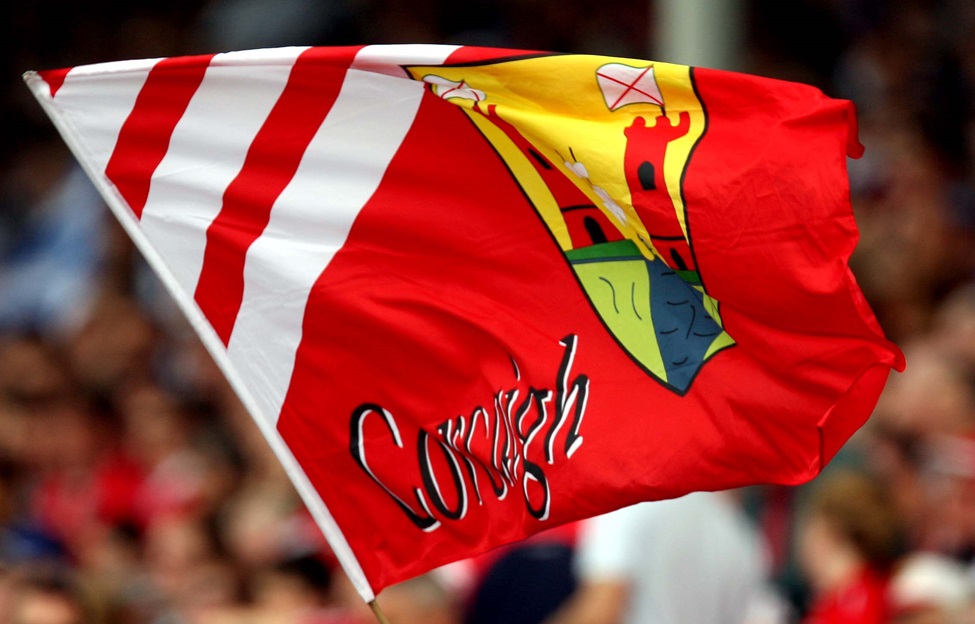
Cork hurling lends itself almost too easily to the lore of Greek mythology. There is Sisyphus of course, condemned, like the rest of us, to shoulder that boulder up the hill again and again, each ascent collapsing just shy of the summit. There is Tantalus too, forever parched, the sweet fruit of triumph never quite within grasp. Odysseus we might also invoke, though even his weary voyage home lasted but ten years. And Narcissus? Best leave that to the rest of the country; they’ve had their laughs with that one already. In the wake of Pat Ryan’s departure, however, it is Icarus who springs most readily to mind. At their best, Cork soared under Ryan, their daring brilliance setting hearts alight. But as the mercurial nature of last summer’s outings revealed, they were never built to heed Daedalus’ warning to “take the middle way”. They either blazed or they broke. And in truth, we should have known that such fearless flight could only end in a fall.
Psychologists speak of the “peak-end rule”, the idea that we remember experiences not in their entirety, but through their highest moments and their endings. So inevitably enough, Pat Ryan’s tenure will be recalled not only for the bravery and beauty that gave us some of our greatest days, but also for the indelible scar of those final thirty-five minutes. Across nineteen championship games, Ryan gave us hurling that was at times simply scintillating, producing moments that carved memories to last a lifetime. And yet those last thirty-five minutes remain, impossible to forget, casting a shadow across all that came before. One can’t help wonder how the deified Donal O’Grady would have been remembered had he stayed on and led Cork to another final after ‘03, only to preside over a collapse of similar scale? How would we have judged him then? There’d be gratitude, sure. How could there not be, given where we’d come from. And yet, there would still linger a part of us that could never fully separate the man from his final act. Harsh, perhaps, beyond all reason. But that, I’m afraid to say, is where we find ourselves now.
The cruelty sharpens further when you consider that, had Ryan decided at quarter past four on that fateful evening to pack his bags and make for home, he would surely still have expected his players to muster more than two points in his absence. We could even indulge those ridiculous rumours, add even more legs to an already centipedal tale and say that the halftime interval did indeed descend into full-on, Harchester United levels of chaos and anarchy. Even then, two points? Whatever one may say, rightly or wrongly, about Ryan’s shortcomings in that doomed final stretch, nobody can deny that he was badly let down by a group of players who owed him so much more. Players who shirked their most basic duty of providing leadership within those white lines. Players who should, at the very least, have been able to conjure their own answers to the problems that were manifesting before them, behind them, and all around them.
After the debacle in the Gaelic Grounds last May, Ryan stepped forward, took the heat, and admitted that he had made the wrong call, shielding his players from much of the public backlash. But a second act of contrition was never going to resonate the same way. Trust between a manager and his players is the foundation of any team, and when that foundation starts to crack, when promises no longer hold, there is only one direction things can go. Only the players can truly know, but one imagines that had Ryan stayed on, his instructions might soon have been met with hesitation rather than absolute conviction, his words no longer carrying the weight of old. Equally, how could Pat Ryan possibly have stepped back into the arena with full trust in largely the same group of players that had faltered so badly? Something, then, had to give and in the end, I suppose there had to be a fall guy. That it was Ryan, dignity and honour personified, who chose to fall on his sword comes as little surprise. Change, in some form or another was unavoidable.
Ben O’Connor will bring change, that much is certain. Change in personnel, on and off the field, most probably. Change in playing style, quite possibly. Throughout the year, players made no secret of their affection for Pat Ryan and genuine and endearing as that may be (especially given the tragic personal circumstances), there’s a view that such unequivocal love between player and manager is not the ideal recipe for success. Was Brian Cody universally loved? Is John Kiely? In the recent Laochra Gael episode on the trailblazing Newtownshandrum twins, we caught a glimpse of the blunt, un-sugar coated style that Ben O’Connor is bound to bring to the table. When the conversation turned to Newtown’s revolutionary playing style, a reticent Ronan Curran wouldn’t go so far as to name the Cork hurler and former teammate who once accused the Avondhu upstarts of “ruining Cork hurling.” The footage then cuts straight to Ben, who says flatly: “I’ll name him straight out. It was Mark Landers.” He was right to do so too. And if ever there was a time that demanded some straight talking, it is now. The players may not love him for it, but they may well love where it takes them.
In his poem Failing and Flying, the American poet Jack Gilbert turns the myth of Icarus on its head. Reflecting on a relationship that has ended, he argues that we too often remember only the fall, overlooking the joy that came before it. Endings, he reminds us, do not erase what was once beautiful and meaningful. Pat Ryan gave us those three titanic clashes with Limerick. He gave us an epic All-Ireland final, and a league-and-Munster double that may yet be remembered as the spark of something greater, even if it is not he who sees it through. Gilbert’s opening line captures it best, reminding us that when you give yourself fully to a cause, when you put your heart and soul into something, the experience itself carries its own worth, even if it ends in defeat.
“Everyone forgets that Icarus also flew”
We might fly again.
Up the Rebels
 Bold Thady Quill
Leave a comment